A beginner’s guide
A Gentle Guide to Whole-Food Plant-Based Eating
A simple introduction to building everyday meals around whole plant foods.
Whole-food plant-based eating can sound more complicated than it really is.
At its simplest, it means building most meals around familiar plant foods such as vegetables, fruit, beans, lentils, chickpeas, whole grains, potatoes, nuts and seeds.
It does not have to begin with a perfect pantry, a completely different way of cooking or an all-or-nothing approach.
For most people, it starts with a few simple meals that feel manageable, familiar and easy enough to repeat.
Begin here
What whole-food plant-based eating means
Whole-food plant-based eating centres meals around foods that are whole or only lightly processed.
That includes vegetables, fruit, beans, lentils, chickpeas, whole grains, potatoes, nuts, seeds, tofu and tempeh.
There is no single perfect way to begin. Some people move toward fully plant-based eating. Others simply start by making more of their meals plant-based.
The useful question is not “Am I doing this perfectly?”It is “Are whole plant foods becoming a more familiar part of the way I eat?”
That is a much easier place to begin.
The everyday foundations
The five main food groups
These familiar foods can carry most everyday meals. You do not need unusual ingredients or a perfect balance on every plate.
Fruit
Fruit can be fresh, frozen or cooked. Think apples, bananas, berries, oranges, grapes, pears, stone fruit and melon. It is easy to add to breakfast, snacks or alongside meals.
Vegetables
Use a mix across the week, including leafy greens, broccoli, carrots, capsicum, cucumber, tomatoes, peas, zucchini, cauliflower and mushrooms. Fresh and frozen are both useful.
Whole grains
Oats, brown rice, quinoa, barley, wholemeal pasta, wholegrain bread and wraps can make meals more filling and practical. Ordinary supermarket options are enough.
Legumes
Lentils, chickpeas, black beans, kidney beans, cannellini beans, butter beans and split peas are useful foundations. Tinned legumes are completely fine. Tofu and tempeh are useful plant-based protein foods too.
Starchy vegetables
Potatoes, sweet potatoes, pumpkin and corn bring substance and comfort. They work especially well in bowls, soups, tray bakes, curries and simple family dinners.
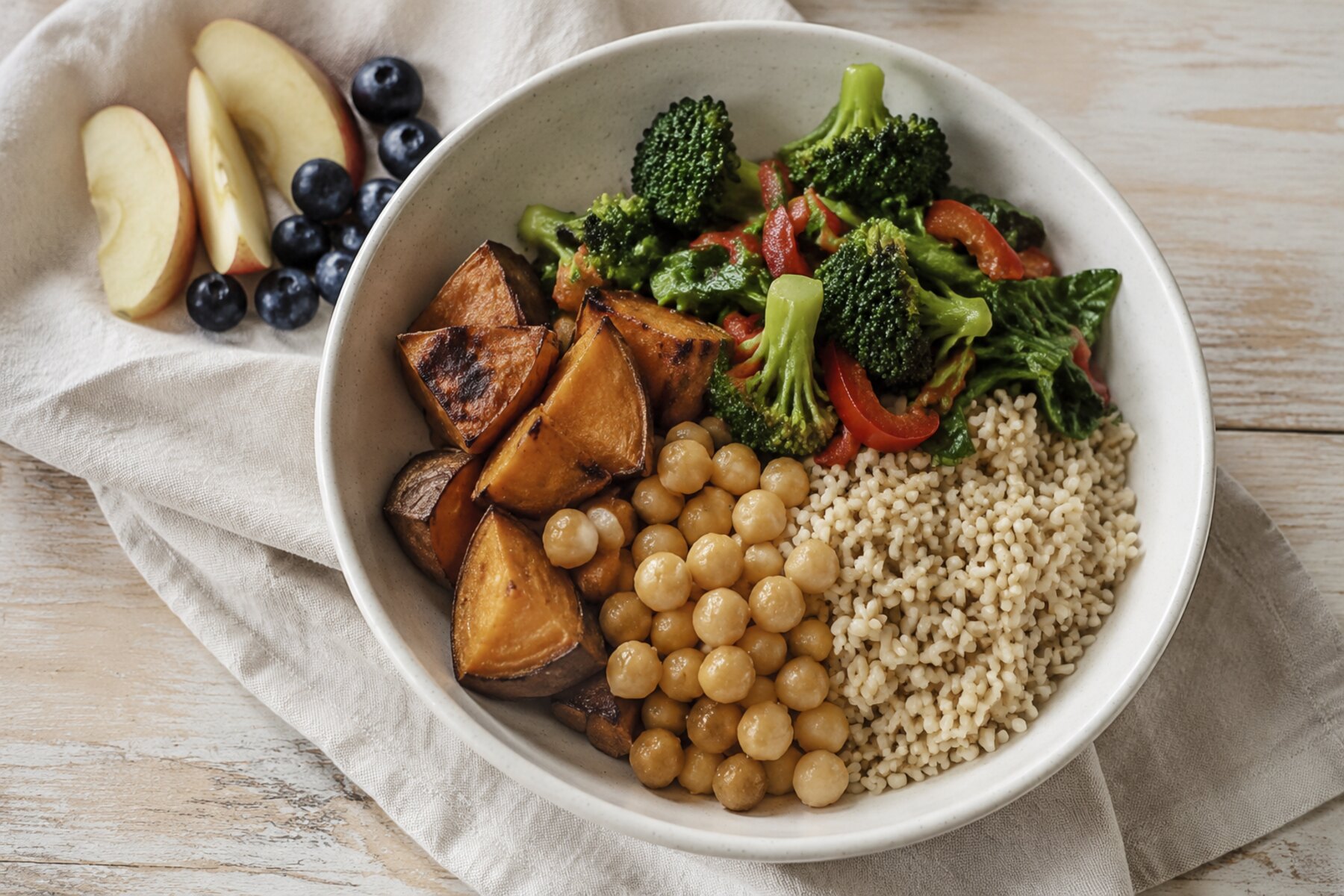
One useful formula
Building a simple plant-based plate
You do not need a complicated formula. A useful meal can often be built from five simple parts.
- 01
Choose a base
Potatoes, rice, pasta, oats, wholegrain bread, wraps or quinoa.
- 02
Add a plant protein
Lentils, chickpeas, beans, tofu or tempeh.
- 03
Add vegetables
Fresh, frozen, steamed, roasted or stir-fried vegetables.
- 04
Add flavour
Tomato, tahini, lemon, herbs, soy sauce, curry powder, hummus, garlic or paprika.
- 05
Add something extra
Avocado, nuts, seeds, fruit or fresh herbs, if you like.
Base + plant protein + vegetables + flavour = an easy meal
Simple enough to repeat is often more useful than trying to make every meal perfect.A calm kitchen
Easy foods to keep on hand
A useful plant-based kitchen does not need to be large. A few dependable basics are enough.
Produce
- Potatoes
- Sweet potatoes
- Onions
- Garlic
- Carrots
- Spinach
- Broccoli
- Capsicum
- Bananas
- Apples
- Lemons
Pantry
- Oats
- Brown rice
- Pasta
- Red lentils
- Tinned chickpeas
- Tinned beans
- Tinned tomatoes
- Tomato paste
- Wholegrain bread or wraps
Fridge
- Tofu
- Hummus
- Fortified plant milk
- Fortified plant yoghurt
Freezer
- Peas
- Spinach
- Broccoli
- Mixed vegetables
- Berries
Flavour basics
- Soy sauce
- Tahini
- Curry powder
- Mixed herbs
- Paprika
- Vegetable stock
- Nut or seed butter
Frozen vegetables and tinned legumes count. They are useful everyday foods, not second-best choices.
Start with A Beginner’s Plant-Based Grocery List, or see the 10 pantry staples that make everyday meals easier.
Keep dinner familiar
Easy meal ideas for beginners
You do not need a new recipe every night. Try starting with simple combinations like these, or use these simple WFPB bowls for busy days.
Lentil tomato pasta
Simmer lentils with tomato and herbs, then stir through pasta.
Chickpea curry + rice
Warm chickpeas and vegetables with mild curry spices and serve with rice.
Tofu vegetable stir-fry
Brown tofu, add vegetables and finish with soy and lemon.
Baked potato + beans
Top a baked potato with warm beans, corn and salad.
Black bean tacos
Fill tortillas with beans, lettuce, tomato and avocado.
White bean tomato skillet
Warm cannellini beans with tomato, garlic and spinach. Serve with toast.
Vegetable fried rice
Use cooked rice, vegetables, peas and tofu with a splash of soy sauce.
Red lentil soup
Simmer red lentils, carrots, tomato and stock until soft.
Chickpea pasta salad
Combine chickpeas, pasta and chopped vegetables with lemon and tahini.
Sweet potato + lentil bowl
Layer roasted sweet potato, lentils, greens and hummus.
A practical first step
Start with a simple week
Five plant-based dinners and one shopping list, free.
A simple place to begin if you would rather see what a week can actually look like.
Everyday foundations
Where does protein come from?
Plant foods can contribute protein throughout the day, and you do not need unusual ingredients to build satisfying meals.
Useful sources include
- Lentils
- Chickpeas
- Black beans
- Kidney beans
- Cannellini beans
- Tofu
- Tempeh
- Soy foods
- Peas
- Whole grains
- Nuts
- Seeds
A simple approach is to include a familiar protein source at most main meals, then eat a varied range of foods across the day.
Simple combinations
- Lentils + rice
- Tofu + noodles
- Beans + potatoes
- Hummus + wholegrain bread
Worth knowing
A few important nutrition notes
A varied plant-based way of eating can be nourishing, but a few nutrients deserve deliberate attention.
Vitamin B12
A fully plant-based diet needs a reliable source of vitamin B12. Sources may include fortified foods and supplementation where appropriate. Speak with a qualified health professional about an approach that suits your needs.
Iron
Useful plant sources include lentils, beans, tofu, whole grains, pumpkin seeds and leafy greens. Pairing these foods with vitamin C-rich foods, such as capsicum, tomato, berries or broccoli, can help support absorption.
Calcium
Useful sources include calcium-fortified plant milk and yoghurt, calcium-set tofu, tahini and some leafy greens. Fortification varies, so check labels.
Omega-3 fats
Plant sources include chia seeds, ground linseed, walnuts and hemp seeds.
Vitamin D
Needs vary depending on factors such as sun exposure, diet and individual circumstances. Speak with a qualified health professional if you are unsure about your needs.
If you have specific health needs, allergies, or concerns about nutritional adequacy, seek personalised advice from a qualified health professional.
Your first week
Where to start
You do not need to change everything at once. Try this instead.
If planning would help, begin with How to Plan a Week of Simple Plant-Based Meals.
- 1
Choose one breakfast
Pick something simple enough to repeat, such as oats, toast with fruit, or plant yoghurt with berries.
- 2
Choose two lunches
Use easy options such as leftovers, hummus wraps, soup with bread or simple bowls.
- 3
Choose three dinners
Choose meals with overlapping ingredients, such as lentil pasta, chickpea curry and tofu stir-fry.
- 4
Shop for those meals
Buy what you actually need first. A completely new pantry can wait.
- 5
Repeat what works
Keep the meals that made your week easier. Adjust the rest.
Simple enough to repeat is more useful than impressive once.
You do not need a perfect pantry or a dramatic overhaul. A few simple meals are enough to begin.
Not a prescription
A simple example day
This is one ordinary example. Appetite and nutrition needs vary.
- Breakfast
- Apple cinnamon oats with fortified plant milk
- Morning snack
- Fruit + plant yoghurt
- Lunch
- Chickpea, sweet potato + salad bowl
- Afternoon snack
- Wholegrain toast + hummus
- Dinner
- Lentil bolognese + vegetables
Gentle next steps
Want a little more help?
Begin with one useful next step, depending on how much support you would like.
First step
A Simple Week of Plant-Based Dinners
If you want to try a simple week before planning anything bigger, start with five plant-based dinners and one shopping list, free.
Get the free weekNext paid step
4 Weeks of Simple Plant-Based Dinners
If you would rather have the decisions made for you, this gives you 20 easy dinners and four weekly grocery lists for ordinary weeks.
Explore the 4-week guideBeginner FAQs
Beginner questions
Where do you get protein on a plant-based diet?
Beans, lentils, chickpeas, tofu, tempeh, soy foods, peas, whole grains, nuts and seeds all contribute protein.
A practical approach is to include a familiar protein source at main meals and eat a varied range of foods across the day.
Is whole-food plant-based eating expensive?
It does not have to be.
Many everyday plant-based staples are relatively simple foods such as oats, potatoes, rice, lentils, beans, chickpeas, frozen vegetables and seasonal produce.
Keeping meals simple and repeating ingredients across the week can also help reduce waste.
Do I need supplements on a plant-based diet?
A fully plant-based diet requires a reliable source of vitamin B12.
Other needs can vary depending on diet, health circumstances, sun exposure and individual factors.
For personalised advice about B12 or other supplements, speak with a qualified health professional.
Can children eat a plant-based diet?
Children have specific nutrition and energy needs, so plant-based eating for children should be planned with particular care.
Growing children need adequate energy, protein and key nutrients such as vitamin B12, iron, calcium, iodine, vitamin D and omega-3 fats.
For families following a fully plant-based diet, personalised guidance from a qualified paediatric dietitian or health professional can be helpful.
One simple week
Want a simple place to begin?
Get five easy plant-based dinners and one shopping list delivered to your inbox.