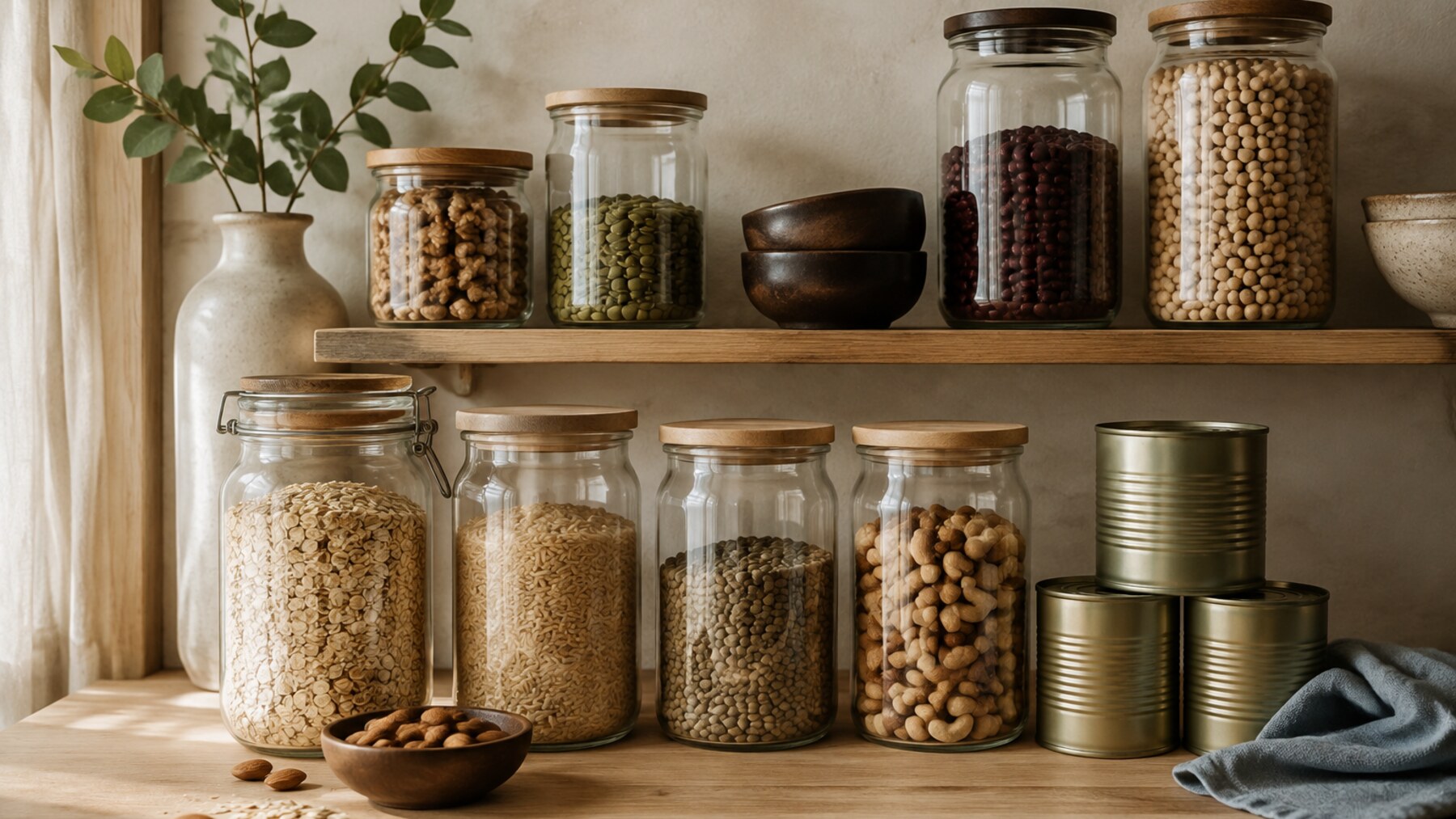
The first plant-based shop is where a lot of people quietly give up. Not because the food is difficult, but because the list they found online had twenty two ingredients in it, four of which needed a health food shop and one of which cost more than the rest of the trolley.
It does not need to be like that. Whole-food plant-based eating is built on some of the cheapest and most ordinary food in the supermarket. Beans, lentils, oats, rice, pasta, tinned tomatoes and whatever vegetables are in season. Almost all of it is in the aisles you already walk down.
Here is what to buy, grouped the way it makes sense to shop.
Shop in four groups, not one long list
A long single list is hard to shop from and easy to abandon. Four small groups is much easier to hold in your head, and it means you can see at a glance what you already have.
The groups are fresh, tins, dry goods and flavour. Everything below fits into one of them.
Fresh
This is the part that changes week to week, and the part worth buying seasonally, because seasonal produce is both cheaper and better.
Buy some leafy greens, whether that is spinach, kale or whatever looks good. Buy a few sturdy vegetables that keep, such as carrots, sweet potato, pumpkin or cabbage. Buy onions and a bulb of garlic, because almost everything starts there. Buy a couple of tomatoes and a cucumber if you eat salad. Buy fruit you will actually eat, which for most people means bananas and apples rather than anything requiring preparation.
One bunch of herbs is worth it if you will use it in more than one meal. If you will not, skip it and use dried.
The rule for the fresh section is to buy for about four days rather than seven. Greens bought on Saturday for a Thursday meal rarely make it. Tins and dry goods can carry the back half of the week.
Tins
This is the group that makes plant-based cooking genuinely easy, and it is worth being generous here because none of it spoils.
Chickpeas, black beans, cannellini beans and butter beans. Two of each is not too many. Tinned tomatoes, both diced and whole. A tin of coconut milk for curries and soups. Lentils if you would rather not cook them from dry, although dry lentils are cheap and need no soaking, so both are fine.
Tinned beans are the single most useful thing in a plant-based kitchen. They turn a bowl of vegetables into a meal, they need no cooking, and they cost very little.
Dry goods
These live in the cupboard for months and cover the nights when the fresh food has run out.
Rolled oats for breakfast. Rice, whichever kind you like. Pasta. Dried lentils, red ones for soups because they collapse into the pot, and brown or green for anything that needs to hold its shape. Nuts and seeds if you use them, though they are the most expensive thing on this list and are entirely optional at the start.
Buy the largest size that you will get through in a few months. Grains and pulses are one of the few places where buying big genuinely saves money.
Flavour
This is the group people skip, and it is the reason so many people decide plant-based food is bland.
Tahini, which makes the dressing that rescues almost anything. Vegetable stock, whether cubes, powder or liquid. Soy sauce or tamari. A good olive oil if you use oil. Salt and pepper, obviously. Then two or three spices you like the taste of, rather than a whole rack. Smoked paprika, ground cumin and a decent curry powder will carry an enormous number of meals between them.
If you buy nothing else from this group, buy the tahini and the smoked paprika. They do more work than their price suggests.
There is more on which staples earn their place in 10 Plant-Based Pantry Staples That Make Everyday Meals Easier.
What you can safely skip at the start
Plenty of things get sold as essential to plant-based eating and are not, at least not in the first few months.
You do not need nutritional yeast, a range of alternative flours, cashew cream, tempeh, egg replacer, protein powder, or any of the specialty products stacked in the health aisle. You do not need six kinds of plant milk. Pick one you like and move on.
None of these are bad. They are just not where to start, and buying them in week one is exactly how a cupboard fills with things you use once.
How much to buy the first time
Buy for four or five dinners, not seven. Buy two of each tin rather than six. Buy one bag of rice and one of pasta, not four grains you have never cooked.
The first shop is not meant to stock a kitchen for a year. It is meant to get you through one week so you can find out which meals you actually enjoy. The second shop will be smaller, because the pantry items will still be there.
If you would like the choosing done for you, read How to Plan a Week of Simple Plant-Based Meals.
One list, one trip
Write it out in the four groups above, cross off what you already have, and do the shop once at the start of the week.
That single habit does more for eating well than any amount of motivation. Almost every week that falls apart falls apart because the ingredients were never in the house. When they are there, the cooking mostly takes care of itself.